Hey there, fellow explorer! If you are dreaming of a safari that feels less like a tourist trap and more like a scene from an epic adventure movie, you have come to the right place. Kenya has plenty of famous spots, but there is something truly legendary about the Tsavo ecosystem. It is raw. It is vast. It is ancient. We at The Walk Adventures have spent years navigating these dusty roads, and we can tell you one thing for sure: Tsavo is where the wild things are.
Spanning over 22,000 square kilometers, Tsavo is actually split into two distinct parks: Tsavo East and Tsavo West. They are separated by the Nairobi-Mombasa highway, but they might as well be two different worlds. Whether you are hunting for the “Big Five” or just want to feel the pulse of the African wilderness, we are here to help you figure out exactly where to go. So, grab a cold drink, get comfortable, and let’s dive into the ultimate guide to Kenya’s largest game reserve.
A Tale of Two Parks: East vs. West
When you book a trip with us, the first question we usually get is: “Which one is better?” The truth is, they are partners, not rivals. Each offers a unique flavor of the Kenyan bush. Tsavo East is the land of open horizons and big skies, while Tsavo West is all about dramatic landscapes and hidden gems.
Tsavo East: The Land of Wide Horizons
Tsavo East is the larger of the two, covering roughly 13,747 square kilometers. Imagine a place where the earth is a deep, fiery red and the savannah stretches out until it meets the sky. It is flat, dry, and arguably the best place in Kenya for traditional game drives.
Because the vegetation is sparse, wildlife visibility is incredibly high here. You do not have to squint through thick bushes to find a pride of lions. They are often right there, lounging under an acacia tree or patrolling the banks of the Galana River. We love bringing our groups here because the open plains offer some of the best photography you will ever experience.
Tsavo West: The Volcanic Wonderland
Cross the highway into Tsavo West, and the scenery flips. This park is smaller (about 9,065 square kilometers) but packs a serious punch in the looks department. It is a world of rolling green hills, ancient lava flows, and crystal-clear springs.
It is more “textured” than the East. You will find yourself driving through dense woodlands and past volcanic cones like Chaimu Crater. While the thick bush makes wildlife spotting a bit of a challenge, think of it as a high-stakes game of hide-and-seek; the payoff is massive. We find that our more adventurous travelers prefer the West for its sense of mystery and immersive activities such as night game drives and guided bush walks.
The Legend of the Red Elephants
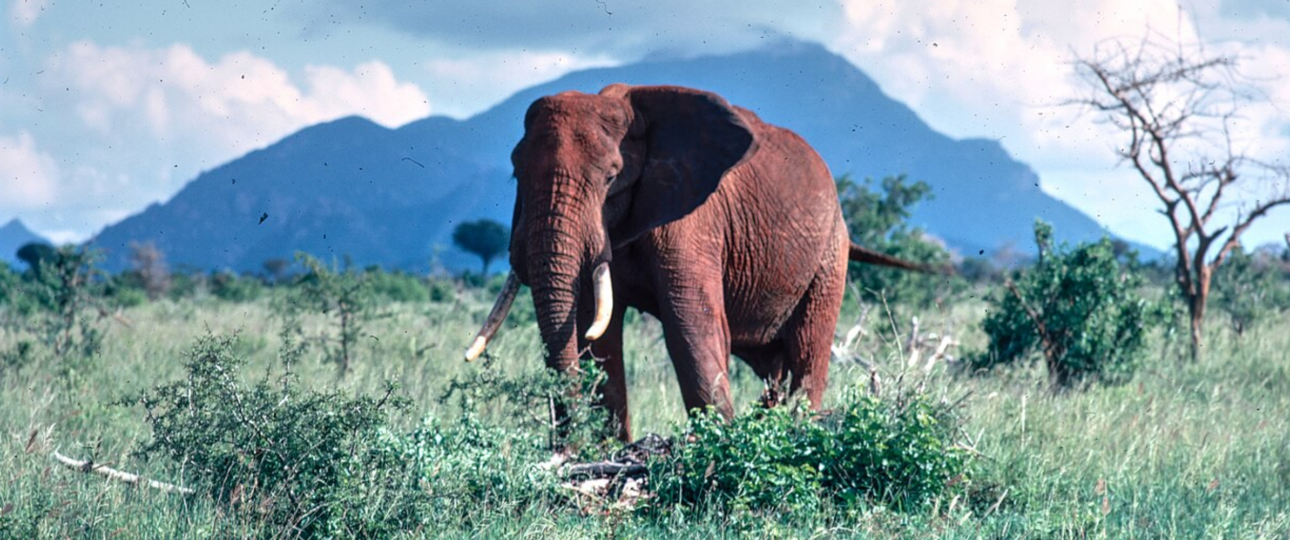
If you see an elephant in Tsavo East, your first thought might be: “Wait, is that a different species?” No, they are regular African elephants, but they come in a very special color—rusty, vibrant red.
This is not a genetic quirk. It is a skincare routine. The soil in Tsavo is rich in iron oxides, giving it its iconic red-orange glow. The elephants here love to take dust baths and roll in the mud to protect their sensitive skin from the sun and biting insects.
We often watch these “Red Giants” congregating at the Aruba Dam or along the Galana River. When they spray themselves with the red dust, it sticks to their skin and acts like a natural sunscreen. At sunset, the light hits their red hides, and they literally shimmer against the backdrop of the golden savannah. It is one of those moments that makes us realize why we do what we do at The Walk Adventures.
Why the Soil Matters
You might wonder why the soil is so red in the first place. Geologists call these soils ferralsols or laterites. They are very old and have been weathered for millions of years. In a weird way, the “poor” quality of this soil is what saved Tsavo. Because it is not great for farming, humans left the area alone, allowing it to become the massive wildlife sanctuary we enjoy today.
The Ghost and the Darkness: Lions of Tsavo
You cannot talk about Tsavo without mentioning the lions. But these are not your average lions. The males in Tsavo are famous for being maneless.
Wait, a lion without a mane? Yep. It is an evolutionary adaptation. Tsavo is hot and dry. Having a big, heavy mane would be like wearing a woolly scarf in the middle of a desert. It would make the lion overheat and make it harder for him to move through the thick, thorny bushes.
The Reign of Terror
The reputation of these lions goes back to 1898, during the construction of the Kenya-Uganda Railway. A pair of maneless lions began hunting the railway workers, killing dozens of people over nine months. The workers were so terrified that they called them “The Ghost” and “The Darkness.“
Lieutenant-Colonel John Henry Patterson eventually took them down, and his story became the basis for the movie The Ghost and the Darkness. Today, researchers believe the lions turned to humans because of a combination of dental problems (making it hard to hunt tough buffalo) and a plague that killed off their usual prey.
When we take you through the park, we will show you where these legendary events happened. Don’t worry, though—modern Tsavo lions are much more interested in zebras and buffalo than in our tour vans!
Tracking the Elusive Leopard
If there is one animal that tests your patience, it is the leopard. They are the ultimate ninjas of the African bush. They are solitary, secretive, and masters of camouflage.
In Tsavo West, leopards love the rocky ridges and the dense woodlands. We often find them around Mzima Springs or hidden in the Ngulia Hills. During the day, they usually lounge in the branches of acacia trees or hide in caves, conserving their energy for the night hunt.
Pro Tip for Sightings
The best way to see a leopard is to join us for a night game drive in Tsavo West. Since they are nocturnal, they become much more active after sunset. We use specialized spotlights to catch the reflection of their eyes in the dark.
There is nothing quite like the adrenaline rush of seeing a young leopard emerge from the shadows just meters from our vehicle. We always remind our guests to stay quiet and keep their hands inside. A leopard can move incredibly fast if it feels threatened!
Saving the Black Rhino
Tsavo West is home to something truly precious: the Ngulia Rhino Sanctuary. The black rhinoceros is critically endangered, and this fenced-off area within the park is a safe haven where they can breed and thrive, away from poachers.
Spotting a black rhino is a special experience. They are browsers, meaning they eat leaves and shrubs rather than grass. You will often find them moving through the thickets at the foot of Ngulia Hill. Because they are quite shy and have a reputation for being a bit grumpy, we always keep a respectful distance. It is a unique opportunity to witness one of Africa’s most ancient species in its natural habitat.
Landmarks You Can’t Miss
Our itineraries at The Walk Adventures are not just about the animals; they are about the places that make you go “Wow.”
Mzima Springs: The Underwater Oasis
This is hands down one of the coolest spots in all of Kenya. Mzima Springs is fed by an underground river that filters through the volcanic rock of the Chyulu Hills. The result? Two hundred fifty million liters of crystal-clear water gush out every day.
There is a submerged observation chamber where you can literally walk down and look at hippos and crocodiles from underwater. It feels like being inside a giant aquarium. The surrounding lush greenery, full of monkeys and birds, is a total contrast to the dry plains nearby.
Shetani Lava Flow
“Shetani” means “devil” in Swahili. This massive field of black, jagged rock was formed only a few hundred years ago by volcanic eruptions. The local people thought the devil himself was coming out of the ground.
It looks like something from another planet. We often stop here so you can walk out onto the lava and explore the nearby caves. It is a stark, hauntingly beautiful landscape that reminds us how powerful the earth really is.
Roaring Rocks
Why are they called Roaring Rocks? There are three theories.
- The wind rushes through the crevices, roaring.
- Lions love to hang out on top of the rocks and roar to mark their territory.
- The constant buzzing of cicadas creates a low roar that fills the air.
Whatever the reason, the views from the top are insane. You can see clearly across the Rhino Valley and all the way to Mount Kilimanjaro on a clear day. It is the perfect spot for a sundowner with us.
The Sensory Safari: Beyond Just Looking
We believe that a safari should engage all your senses, not just your eyes. When you are out in the Tsavo bush with us, we want you to take a second to just be.
The Smells of the Bush
Africa has a very distinct scent profile.
- Petrichor: That amazing, earthy smell that rises from the hot red dust when the first rain falls.
- Wild Basil: As our tour van brushes against certain bushes, you will catch a whiff of fresh, kitchen-like herbs.
- Wild Sage (Leleshwa): A clean, medicinal smell that animals and humans have used for centuries as an insect repellent.
- Leopard Scent Mark: Believe it or not, leopard urine smells exactly like buttered popcorn. If you smell popcorn and there isn’t a movie theater nearby, keep your eyes peeled!
The Sounds of the Night
Once the engine is off and the sun goes down, the real concert starts. You will hear the constant “clink” of cicadas, the eerie, rising “whoop” of a spotted hyena, and the occasional deep rumble of an elephant nearby. Around the campfire at night, the smell of woodsmoke and the crackle of logs make the perfect backdrop for sharing the day’s stories.
Dealing with the Real Villains: Tsetse Flies
Let’s be real—safari isn’t always glitz and glamour. In the wooded areas of Tsavo West, you might run into tsetse flies. They look like common houseflies but have a nasty, painful bite.
Here is our insider advice on how to beat them:
- Avoid Blue and Black: These flies are weirdly attracted to dark blue and black. It is why official fly traps are made of blue-and-black cloth. Wear khaki, beige, or olive green instead.
- No Denim: Jeans are basically a tsetse fly magnet because of the color and the fit.
- Cover Up: Long sleeves and pants are your best friends.
- Repellent: DEET helps with mosquitoes, but for tsetse flies, the best defense is the right clothing color.
When to Pack Your Bags
Timing is everything. Kenya has a warm climate year-round, but the seasons completely change the landscape.
The Dry Season (June to October / January to February)
This is the “Goldilocks” time for game viewing. Because it hasn’t rained in a while, the grass is short, and the waterholes are shrinking. Animals have to come to the rivers and dams to drink, which makes them very easy to find.
The Rainy Season (March to May / November to December)
If you love birdwatching or lush, green landscapes, this is your time. The park transforms into a vibrant garden. It is the best time to see baby animals and European migratory birds. Just be prepared for some muddy roads—our expert drivers know how to handle them, but it’s definitely an adventure!
Your Ultimate Safari Packing List
We want you to be comfortable on your trip with us. Here is what we recommend you throw in your bag:
- Binoculars: Do not rely on your phone’s zoom. Get a decent pair of binoculars so you can see a lion’s whiskers from a distance.
- Sun Protection: A wide-brimmed hat is a must. The African sun is no joke!
- Layers: It is hot during the day, but early-morning game drives can get surprisingly chilly. Bring a light fleece or sweater.
- Footwear: You don’t need heavy hiking boots unless you are doing a walking safari. A good pair of sneakers or light walking shoes is usually fine.
- Hydration: We always provide water, but having your own reusable bottle is great for the environment.
Why Travel with The Walk Adventures?
At the end of the day, a safari is more than just checking animals off a list. It is about the stories you take home. We at The Walk Adventures pride ourselves on being your “adventure buddies.“
We handle all the boring logistics, the park fees, the gate entries, the route planning, so you can just focus on the magic. Our tour vans are designed for comfort (yes, we actually have legroom!), and our guides are local experts who know these parks like the back of their hands.
Whether you want a budget-friendly trip or a luxury experience at a lodge like Kilaguni Serena, we have got you covered. We are committed to sustainable tourism that helps preserve this incredible landscape for the next generation of explorers.
So, are you ready to see the red elephants of Tsavo for yourself? Let’s make it happen. We can’t wait to show you the magic of Kenya’s largest game reserve.
Safe travels and see you in the bush!