Hell’s Gate National Park stands as a dramatic testament to the raw volcanic power of the Great Rift Valley. It’s not just another stop on a safari circuit; it’s a living, breathing landscape where the earth’s internal heat meets the vastness of the Kenyan plains. Situated in Nakuru County near the freshwater ripples of Lake Naivasha, this park offers a rare sense of freedom that most other Kenyan protected areas can’t provide.
While many parks require visitors to stay cooped up in a safari vehicle, Hell’s Gate invites them to get out and experience nature on foot or two wheels. This guide explores every corner of this 68.25-square-kilometer wonder, providing the insights you need for an unforgettable journey, whether you organize it yourself or through a trusted partner like The Walk Adventures.
The Story Behind the Name: History and Exploration
The name Hell’s Gate might sound a bit intense for a place of such natural beauty, but the history behind it is as layered as the cliffs themselves. Explorers Gustav Fischer and Joseph Thomson were the first Europeans to document this narrow break in the red cliffs in 1883. It’s said they coined the name after a particularly challenging encounter with the resident Maasai tribesmen, though other tales suggest the “hellish” plumes of steam rising from the geothermal vents inspired the title.
Long before colonial explorers arrived, the Maasai people knew this area as Enee Meneng’a, a term that carries weight in local oral traditions. Legend says that many years ago, an eruption from the nearby Mount Longonot buried several tribesmen alive, leading the community to believe that powerful, perhaps even spiritual, forces were at work beneath the surface. Today, the park is a peaceful retreat, but those stories of old still linger in the shadows of the towering rock formations.
Geological Wonders: A Landscape Shaped by Fire and Water
The scenery at Hell’s Gate feels like it was plucked straight out of a prehistoric era, and that’s because, geologically speaking, it was. The park sits on the floor of the Great Rift Valley, framed by the dormant volcanoes of Longonot and Suswa. Most of the park is blanketed in volcanic ash from a Longonot eruption that happened about a century ago, creating a unique soil profile that supports a specialized ecosystem.
The Ol Njorowa Gorge
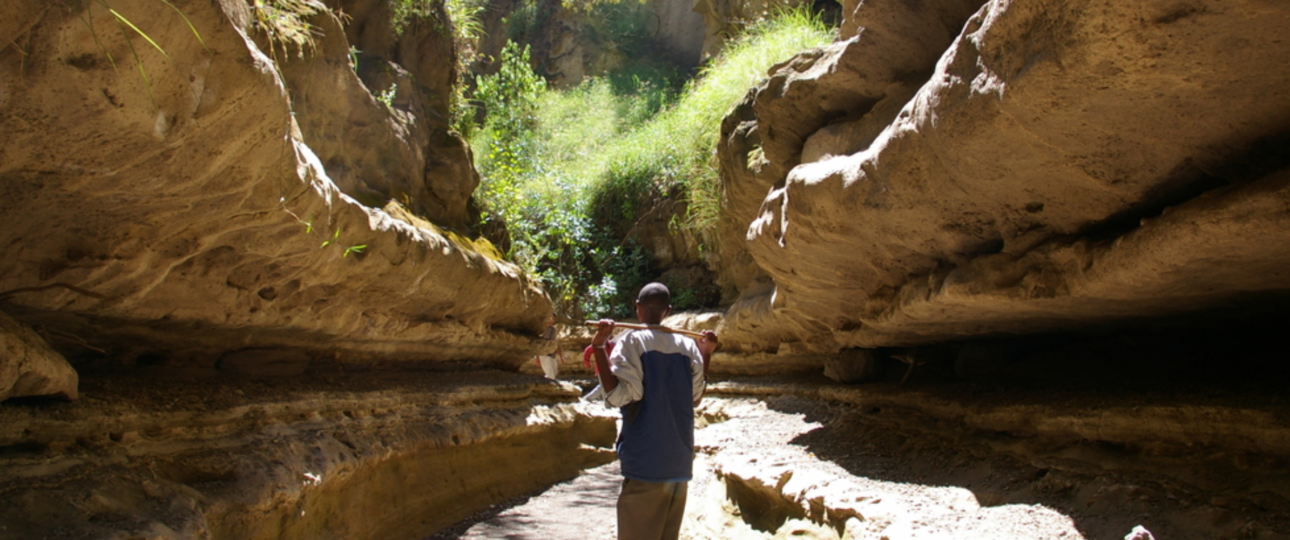
The true heart of the park is the Ol Njorowa Gorge, an ancient tributary of a prehistoric lake that once fed early human populations in the Rift Valley. Walking through the gorge is an exercise in perspective. The water-gouged walls, reaching heights of up to 400 feet, are composed of striking red and ochre rock. As adventurers move deeper into the canyon, they encounter naturally carved caves, steaming vents, and hot springs that trickle down the rock faces.
Volcanic Plugs: Fischer’s Tower and Central Tower
Standing like sentinels at either end of the park are Fischer’s Tower and Central Tower. These are volcanic plugs—the solid remains of lava that cooled inside the vent of an active volcano. Over the years, the softer surrounding rock eroded away, leaving these massive stone pillars behind.
Fischer’s Tower, standing about 25 meters tall, is located just inside the Elsa Gate. It’s not just a landmark; it’s a cultural icon. Maasai folklore tells the story of a girl who turned to stone after looking back at her home on her way to be married, a cautionary tale about tradition and obedience. Central Tower is located further south and offers an even more imposing presence, often serving as a backdrop for the park’s geothermal steam plumes.
The Mystery of the Obsidian Caves
For those who love geology, the obsidian caves are a must-see. These formations are made of black, glass-like rock that shimmers with rainbow colors when hit by the sun. This rock was a vital resource for early pastoralist societies, who used it to craft sharp tools and weapons.
A Walk on the Wild Side: Wildlife and Birdlife
It’s easy to get distracted by the rocks, but the living residents of Hell’s Gate are just as impressive. Because the park lacks high concentrations of large predators like lions or elephants, it’s one of the few places in Kenya where humans can safely walk or cycle among herds of animals.
Mammals of the Plains
Travelers are likely to be greeted by zebras, buffaloes, and giraffes as soon as they pass through the gates. The plains are also home to:
- Eland and Hartebeest: Large antelopes often found grazing in the open grasslands.
- Thomson’s and Grant’s Gazelles: Graceful sprinters that move in large herds.
- Chanler’s Mountain Reedbuck: A rare species that prefers the rocky slopes and higher ground.
- Rock Hyrax: Small, furry mammals that live on the towers and cliffs; interestingly, they are the closest living relative to the elephant.
- Baboons and Vervet Monkeys: Often seen playing near the gorge or judging visitors’ cycling skills from a distance.
The Vulture Sanctuary
Hell’s Gate is world-renowned for its avian population, specifically its raptors. The towering cliffs provide perfect nesting sites for birds of prey. It is home to the only protected Ruppell’s vulture colony in Kenya. These birds are critically endangered, making the park a vital hub for conservation efforts. Travelers might also spot:
- Verreaux’s Eagles: Large, dark eagles that hunt the hyraxes on the cliff faces.
- Augur Buzzards: Frequently seen soaring on the thermal updrafts created by the valley’s heat.
- White-fronted Bee-eaters: Vibrant birds that nest in the sandy walls of the gorge.
Top Activities: How to Explore Hell’s Gate
The beauty of Hell’s Gate is that it caters to every level of adventure. Whether one prefers a relaxing stroll or a vertical challenge, there’s something here to get the blood pumping.
Cycling through the Wild
Biking is arguably the most popular way to see the park. There’s nothing quite like the feeling of pedaling down a dirt road with a tower of giraffes grazing just a few meters away.
- Rentals: Bikes are available at the Elsa Gate from outside vendors for about KES 500 to 1,000 per day.
- The Route: The most common path is the 17 km round trip from the Elsa Gate to the Lower Gorge Ranger Post.
- The Experience: The roads are a mix of gravel and tarmac, and while mostly flat, there are some sections that will test the gears—and the legs.
Rock Climbing for All Levels
If the cliffs look inviting, it’s because they are. Hell’s Gate is Kenya’s premier rock-climbing destination.
- Fischer’s Tower: The go-to spot for beginners. It’s a single-pitch climb that provides solid holds and manageable challenges. Guided sessions are available, with local experts providing all necessary gear, including harnesses and helmets.
- The Main Wall and Central Tower: Pros include multi-pitch traditional climbing routes with significant exposure and technical difficulty.
- Fees: A KWS climbing permit costs KES 500, and hiring a guide can range from KES 3,000 to 5,000 per group.
Hiking the Ol Njorowa Gorge
No trip to Hell’s Gate is complete without descending into the gorge. This is where the landscape gets truly intimate.
- The Path: The standard hike takes about 1.5 to 2 hours and covers roughly 3–4 km of winding canyon.
- The Spots: Adventurers will pass through Hell’s Kitchen (a steamy, narrow section) and reach the Devil’s Bedroom, a massive chamber where the rock walls seem to close in overhead.
- The Water: One highlight is walking through warm streams and even finding a natural hot waterfall, the Devil’s Shower, where the water is rich in healing minerals.
- Guides: Hiring a local guide is mandatory for the gorge hike, and for good reason; they know the signs of flash floods and can share Maasai legends about each rock formation.
The Olkaria Geothermal Spa: Nature’s Sauna
After a morning of cycling or climbing, the Olkaria Geothermal Spa is the ultimate reward. Located at the southern end of the park, this isn’t a typical swimming pool.
The spa consists of three lagoons filled with natural geothermal water pumped from deep underground. The water is entirely natural, with no additives or treatments, and it’s famous for being rich in sulfur and silica. Many visitors swear by its ability to cure skin ailments and soothe sore muscles after a long day of adventure.
- Entry Fees: For residents, it’s KES 1,000 per adult and KES 500 per child. Non-residents pay USD 18.
- Pro Tip: Bring a towel; they are available for hire (KES 200) if you forget yours. The spa is an alcohol-free zone, making it a safe and relaxing environment for families.
- Fun Fact: The Walk Adventures often includes a stop here at the end of their day trips, allowing guests to soak while watching the steam rise from the nearby power station.
Planning Your Visit: Logistics and Essentials
Getting to Hell’s Gate is straightforward, but a little preparation goes a long way.
When to Go
The dry seasons, June to October and January to February, are the best times for a visit. The trails are dry, which is essential for cycling and hiking the gorge. During the rainy months (April–May and November), the gorge may be closed due to flash flood risk. However, the “green season” offers lush landscapes and fewer crowds, which some travelers prefer.
How to Get There
The park is about 90 km from Nairobi, roughly a 2-hour drive. Most visitors take the A104 highway to Naivasha and then turn onto Moi South Lake Road. If not driving, a taxi or boda boda from Naivasha town can reach the gate for about KES 500–1,000. The Walk Adventures offers comfortable tour vans with plenty of legroom, making the journey part of the fun.
Note: All KWS payments are now handled via the eCitizen platform, so ensure your account is set up before arriving at the gate.
What to Pack
The sun in the Rift Valley can be intense, so packing the right gear is key.
- Sun Protection: Hat, sunglasses, and plenty of sunscreen.
- Footwear: Sturdy hiking shoes or sneakers with good grip for the gorge.
- Hydration: At least 1–2 liters of water per person, especially if cycling.
- Swimwear: Don’t forget a swimsuit and a towel for the geothermal spa.
- Identification: A passport or ID is required for entry verification.
- Snacks: While there’s a small café near the spa, bringing a picnic lunch is highly recommended for a day in the wild.
Safety First: Navigating Hell’s Gate Responsibly
While Hell’s Gate is very safe compared to other parks, nature still deserves respect.
Flash Floods
The biggest risk in the park is flash flooding in the Ol Njorowa Gorge. Water can rise several feet in minutes if it rains in the surrounding highlands, even if it’s sunny in the park. This is why hiking with a guide is mandatory. If a guide says the gorge is closed, listen to them—they are looking out for everyone’s safety.
Geothermal Hazards
The steam vents and hot springs are naturally heated and can reach temperatures hot enough to cause serious burns. Never touch the water in unauthorized areas and stay on the marked trails in the geothermal zones.
Wildlife Etiquette
Even though there are no lions roaming the main roads, the animals here are still wild. Buffaloes can be particularly unpredictable, and baboons are notorious for trying to snatch food or shiny objects. Maintain a respectful distance and never try to feed the animals.
Pop Culture and the Big Screen
It’s impossible to talk about Hell’s Gate without mentioning its Hollywood connections. If the cliffs look familiar, it might be because they inspired the Pride Lands in Disney’s The Lion King. Members of the film crew spent weeks in the park sketching the rock formations and studying the wildlife to create the iconic animated landscapes.
The park also featured heavily in Lara Croft: Tomb Raider – The Cradle of Life. Angelina Jolie’s character was filmed navigating the rugged terrain, showcasing the park’s dramatic beauty to a global audience.
Sustainability and Geothermal Energy
Hell’s Gate is a unique example of how conservation and industry can coexist. The Olkaria Geothermal Power Stations are the first of their kind in Africa and provide a significant portion of Kenya’s clean energy. While the pipelines and power plants have changed parts of the landscape, they also represent a commitment to green technology.
KenGen, the company that operates the plants, works closely with KWS to minimize the impact on wildlife. Visiting Hell’s Gate is a great way to see how Kenya is leading the way in geothermal development while still protecting its natural heritage.
Why The Walk Adventures?
Planning a trip to Hell’s Gate can involve many moving parts—renting bikes, hiring guides, navigating eCitizen, and timing a spa visit. That’s where The Walk Adventures comes in.
As “adventure buddies,” the team handles all the nitty-gritty details so the focus remains on the journey. From ensuring the tour vans are comfortable to organizing the perfect itinerary that combines the gorge hike with a relaxing spa soak, every trip is designed to be seamless and stress-free.
Final Thoughts: The Adventure is Calling
Hell’s Gate National Park is more than just a destination; it’s an experience that stays with you. It’s the sound of wind whistling through the gorge, the sight of a vulture soaring over red cliffs, and the feeling of warm, mineral-rich water on tired feet. It’s a place where one can truly walk on the wild side and connect with the earth’s primal forces.
So, pack some water, grab a bike, and get ready for an adventure that’s as epic as the Rift Valley itself. The gates are open, the steam is rising, and Hell’s Gate is waiting for you to discover its secrets.
Hell’s Gate is a park that demands to be explored, not just seen. Whether standing atop Fischer’s Tower or trekking through the depths of the Ol Njorowa Gorge, the scale and beauty of the Great Rift Valley are on full display. With the support of The Walk Adventures, this journey into the heart of Kenya’s volcanic history is guaranteed to be an unforgettable chapter in any traveler’s story.