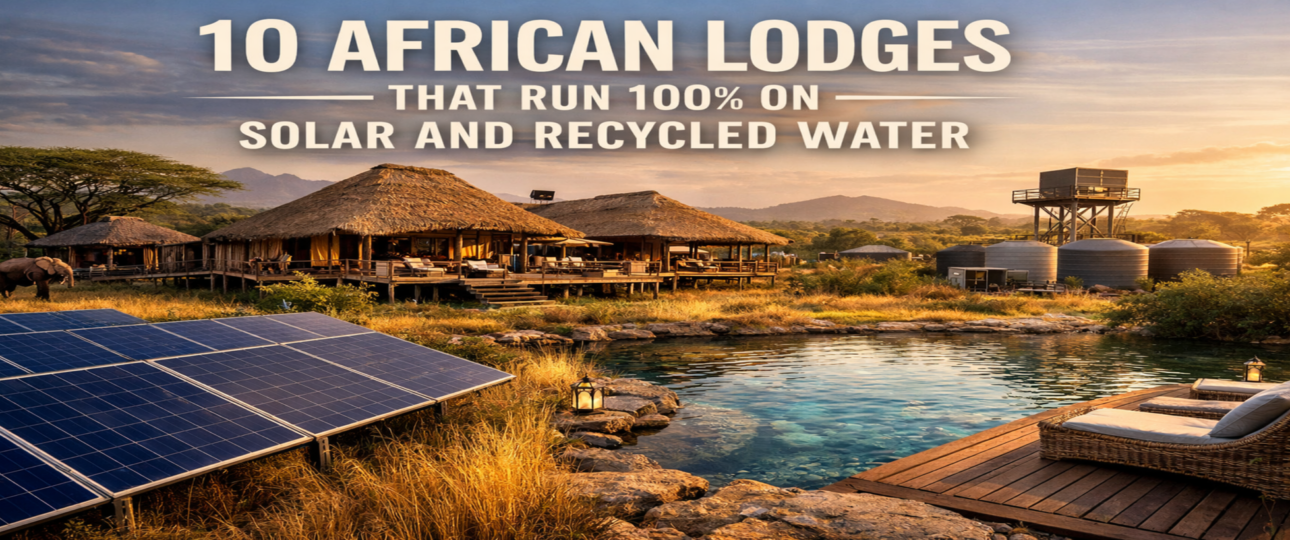
Imagine waking up to the rhythmic grunts of hippos and the chirping of kingfishers, knowing your morning shower didn’t cost the planet a single drop of clean groundwater.
The African safari industry is undergoing a massive shift toward “Conscious Luxury,” with travelers now demanding 100% renewable energy and circular water systems as a standard, not a perk. We at The Walk Adventures are seeing this trend firsthand. Our clients aren’t just looking for the Big Five anymore; they want to know that their presence helps protect the very wild spaces they’ve come to admire.
The numbers tell a pretty wild story about where we’re headed. The Southern Africa safari tourism market was valued at about $13.20 billion in 2024. Experts expect this market to grow to nearly $29.84 billion by 2033, at a steady 9.4% annual rate. This growth isn’t just about more people traveling. It is about a new generation of explorers who value sustainability as much as high-thread-count sheets.
At The Walk Adventures, we believe that luxury shouldn’t burden nature. In fact, 83% of travelers now say that sustainable travel is vital to them, according to recent research. Busy professionals are leading this charge. They want their limited vacation time to have a “net positive” impact on the world.
Why the “Solar Shift” is Changing the Game
For a long time, the “thump-thump” of diesel generators was the background noise of the bush. But that is dying out. Solar power is now a strategic business move that makes lodges more resilient. Transitioning to solar power eliminates a lodge’s reliance on unstable national grids and cuts the high costs of hauling diesel fuel into remote areas.
It also improves the guest experience. Imagine a “Silent Safari” where you glide past an elephant in an electric vehicle. You hear the crunch of the grass under the tires and the elephant’s deep rumble instead of a noisy engine. These solar-powered electric safari vehicles (ESVs) can save nearly 50,000 liters of diesel over a few years, making them a win for the lodge and the environment.
Emboo River, Kenya
Emboo River is a total pioneer in the Maasai Mara, running as a fully carbon-neutral lodge with a 100% solar-powered grid. We love taking our guests here because it proves that you don’t have to sacrifice comfort to be eco-friendly. The lodge is tucked into a river bend, giving you front-row seats to hippos and elephants.
What makes Emboo River special is its water system. They use lagoons filled with local wetland plants to filter 100% of their wastewater. By harvesting and recycling all its water, the lodge has slashed its consumption by a staggering 90%. This is huge in a place like the Mara, where water is everything.
The lodge was the first in the Mara to offer a full fleet of electric safari vehicles. These silent Land Rovers allow you to use all your senses while guiding. You can actually smell the wild sage and hear the birds’ warning calls, without any exhaust fumes in the air.
Cheetah Plains, South Africa
Cheetah Plains is a beacon of what a carbon-negative safari can actually look like in the Sabi Sand. The lodge is 100% off-grid. They’ve partnered with renewable energy experts to create a massive solar plant that powers everything from the kitchen to the luxury suites.
The technical setup is pretty impressive. They harvest enough solar energy to power three entire villas and their fleet of electric vehicles. Their silent Land Cruisers help mitigate over 581 tonnes of CO2 emissions every single year. That’s a massive win for the local wildlife.
We at The Walk Adventures find that guests love the “behind-the-scenes” eco-tours here. You get to see exactly how the solar plant and water treatment systems work. It turns a vacation into an inspiring lesson on how to live better on our planet.
Xigera Safari Lodge, Botswana
Xigera Safari Lodge is basically a love letter to Botswana, running on 92% to 95% solar energy via a state-of-the-art Tesla system. It is located in the heart of the Okavango Delta, a UNESCO World Heritage Site. The lodge is built on raised platforms so the floodwaters can flow naturally beneath it.
Their water game is just as strong as their solar. They use reverse osmosis to purify water on-site, making it safe to drink straight from the tap. By purifying their own water, Xigera has completely eliminated the need for single-use plastics.
What we find really cool is their artistic soul. Most of the art in the lodge is made from recycled or foraged materials. One piece is even made entirely from beer bottle caps, showing that beauty can come from waste.
Mombo Camp, Botswana
Mombo Camp is often called the flagship of the Delta, and its 2018 rebuild set a new gold standard for eco-friendly luxury. The entire camp is 100% solar-powered. They even used 3D scanning during construction to make sure no trees were cut down.
The water system here is a “closed-loop” setup. Wastewater is treated above ground to prevent pollution of the sensitive Delta ecosystem. Every drop is cleaned and processed before being returned to the earth, protecting the home of the local rhino population.
Mombo is a legend for a reason. It has been ranked as the #1 hotel in the world, proving that sustainability is the highest form of luxury. We always tell our clients that a stay here is an investment in the future of the Okavango.
Noka Camp, South Africa
Noka Camp is a cliffside marvel in the Lapalala Wilderness, entirely off-grid and carbon-neutral. It is one of Africa’s few entirely not-for-profit lodges. This means 100% of the profits go back into conservation and community efforts.
The lodge runs on a sophisticated Tesla solar-hybrid system. This renewable energy prevents the release of about 190 metric tonnes of carbon emissions every year. Noka Camp even calculates each guest’s carbon footprint for their entire journey, so they can offset it.
The views from the glass-walled villas are absolutely breathtaking. Staying here feels like you are part of a bigger story about saving the Waterberg region. We at The Walk Adventures love recommending such spots to those who want total privacy and a clean conscience.
Chisa Busanga Camp, Zambia
Chisa Busanga Camp is famous for its “Bird’s Nest” rooms and its 100% solar-powered operations in the remote Busanga Plains. The rooms are inspired by the weaver bird’s nest, giving you an incredible view of the floodplains. Because it is so remote, being 100% off-grid is a necessity.
The water management here is top-tier. They have 10,000-liter rainwater tanks at every suite to harvest water for plunge pools and cleaning. Wastewater from the laundry is even recycled to wash the safari vehicles, ensuring no drop is wasted.
The “Silent Safari” experience here is unmatched. You can glide past lions and elephants in total silence, feeling like a true observer in their world. It’s the kind of experience we at The Walk Adventures live for.
Ila Safari Lodge, Zambia
Ila Safari Lodge is a true pioneer, having built its walls using the ancient art of “sandbagging” to reduce its carbon footprint. By using local sand, they avoided the emissions of trucking in tons of cement. These walls also act as natural insulation, so you don’t need much air conditioning.
The lodge runs on a massive solar plant that covers 90% of its power needs. They also have an incredible biogas unit. This unit takes sewage and food waste and turns it into cooking gas for the kitchen. It is a perfect example of a circular economy in action.
We love taking guests on their solar-powered boat. It’s one of the few ways to explore the Kafue River without disturbing the birdlife or the water. It really makes you feel connected to the river’s rhythm.
Hoanib Skeleton Coast Camp, Namibia
Hoanib Skeleton Coast Camp is Namibia’s first 100% solar-powered camp, located in a rugged desert valley. The desert environment is incredibly fragile. Operating on solar allows the camp to run with almost zero noise or emissions.
Water is as precious as gold here. The camp uses a state-of-the-art filtration and waste system to ensure every drop counts. By switching to 100% solar, the camp saved over 9,000 liters of diesel compared to similar properties.
The camp’s research center is a major highlight. You can sit with conservationists and learn how they track desert-adapted elephants in the dry riverbeds. It’s a deep, meaningful way to spend your time in Namibia.
Garonga Safari Camp, South Africa
Garonga Safari Camp is a leader in water wizardry, using a six-phase filtration system to recycle wastewater. This system makes the water so clean that it is actually safe for the local wildlife to drink. The lodge also uses solar energy to meet about 30% of its electricity needs, with the new Little Garonga camp being 100% solar.
They also have a fantastic biogas system. Organic kitchen scraps are turned into fuel for the camp, reducing waste and energy costs. This holistic approach is why they are a favorite in the Greater Makalali reserve.
The atmosphere here is all about “soulful safaris.” You can enjoy a bush bath under the stars, knowing the water is being handled with total care.
Zarafa Camp, Botswana
Zarafa Camp is the pinnacle of the “100% conservation, 100% luxury” model in Botswana. It was built using recycled hardwood and runs almost entirely on solar power. The camp is a leader in the Great Plains Conservation collection.
Their water management is incredibly thorough. They use UV reverse osmosis for drinking water and an integrated greywater recycling system. Using biodigesters, they even convert vegetable scraps into methane gas for cooking.
Zarafa is proof that you can have a “100% guilt-free holiday.” Every detail is designed to protect the Zibadianja Lagoon and the wildlife that depends on it. It is one of the most romantic and responsible spots in Africa.
The Professional’s Edge: Why Sustainability Matters in 2026
For busy professionals, travel is more than a break—it is an investment. Nairobi, for example, has won “Africa’s Leading Business Travel Destination” for seven years in a row. We at The Walk Adventures see business leaders increasingly choosing lodges that align with their corporate ESG goals.
Choosing a 100% solar-powered lodge is a statement. It shows that you value the preservation of the heritage and environment of the destinations we love.
The Science of the “Silent Safari“
Wait, how does an electric vehicle actually handle the bush? It turns out pretty well. Electric safari cars run at 95% efficiency compared to just 20-30% for standard diesel engines. They have sealed motors, so they can actually wade through deep sand and ford rivers better than some traditional trucks.
The cost of converting a vehicle to electric is around $45,000 to $60,000. But because you aren’t buying fuel and maintenance costs are low, most lodges make their money back in about 4 years.
Key Takeaway
The future of African travel is 100% green. Sustainable luxury is growing at 9.4% annually because it provides a better experience—silent safaris, cleaner water, and 100% guilt-free comfort. By choosing lodges like Emboo River, Cheetah Plains, or Mombo, you are supporting a circular economy that protects wildlife and empowers local communities. We at The Walk Adventures believe that every journey should leave the world a little better than we found it.