Sierra Leone’s coastline doesn’t enter the chat like a destination. It strolls in like a scandal.
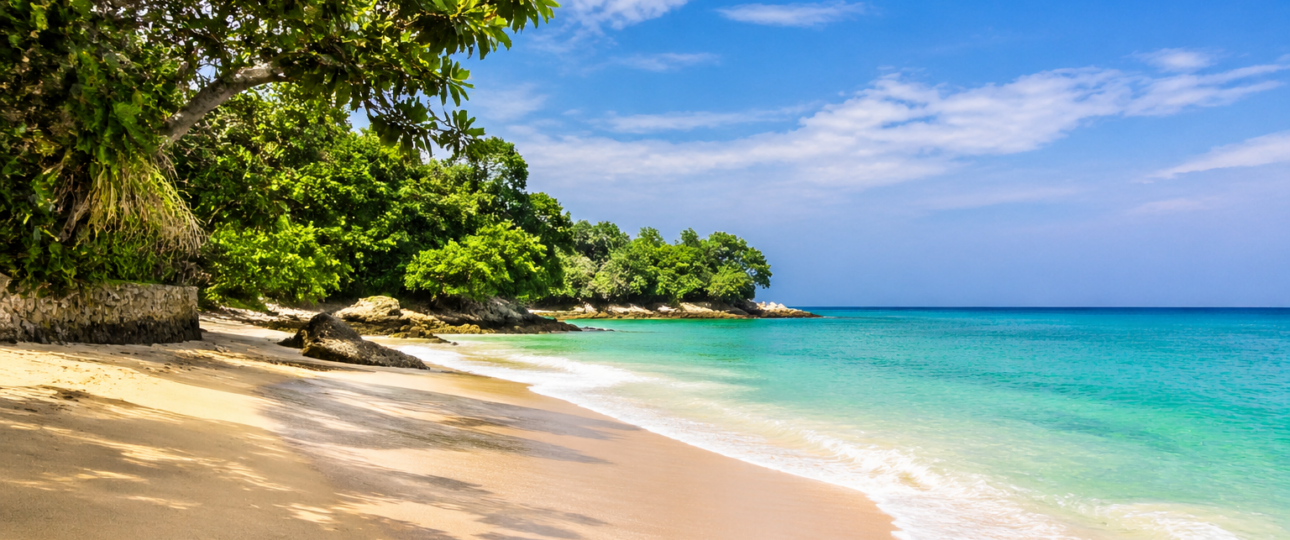
While the rest of the world queues for beach clubs and fights for space on sand that smells vaguely of sunscreen and regret, this stretch of West African shore is out here serving main‑character energy in near‑silence. Waves slide in on empty, glassy bays. Palm trees lean over water so bright it looks like it’s been illegally filtered. Fishing boats bob like punctuation marks in a story almost no one is reading yet.
On paper, it makes no sense. A coastline this gorgeous, this close to Europe, should be overexposed by now, all hashtags and infinity pools. Instead, the tourism numbers stay suspiciously low, the beaches stay blissfully underbooked, and you’re left with the delicious feeling that you’ve stumbled onto something the algorithm forgot.
This isn’t just “Africa’s best‑kept coastal secret.” It’s the plot twist: a place that looks like a backdrop, behaves like a love interest, and quietly dares you to show up before everyone else claims they knew it all along.
River Number Two: The Scene‑Stealer Entrance
If this coastline were a movie, River Number Two would be the first close‑up.
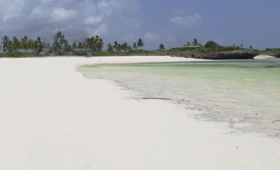
You drive past villages and mango trees, then the world just…opens. A crescent of white sand cradles a strip of turquoise water, mountains and forested hills leaning in like background extras craning to watch the star. A river glides through the middle of it all, slicing the beach in two before dissolving into the Atlantic, leaving shallow pools that hold the sky like mirrors and a sandbar that looks contraband‑level gorgeous. It doesn’t scream. It just is, and everything else rearranges around it.
This beach isn’t owned by a big brand. It’s run by the local community. You pay a small fee at the entrance, knowing it helps the village. You sit at simple wooden tables where the fish was in the ocean an hour ago. You can take a boat trip up the river with someone who’s been reading that water since childhood.
Come in the dry season, in the morning, and you get that main‑character moment: you step onto sand glowing in soft light, the air still cool, and for a second it feels like the entire bay woke up just for you.
Tokeh: The Long, Slow Burn
Every story’s lead needs a place to brood, and Tokeh is that long, lingering shot.
The beach stretches out in a clean line of pale sand, like someone dragged a fingertip along the coast and refused to lift it. The sea here doesn’t crash in, it glides—glass‑clear and lazy, brushing the shore with enough warmth to make you forget what month it is back home. Small lodges sit back among the palms, low and easy, leaving the horizon uninterrupted. No walls between you and the view. No high‑rise is trying to steal the frame.
Tokeh has quiet gravity. You wake up, push open your door, and there’s the ocean, waiting. No big monologue, no fireworks. Just a soft, steady presence that makes your return ticket feel like an overreaction. People come here “for a couple of nights,” and suddenly every email they send from their phone starts with “Just a quick one…” because the beach has taken over the narrative.
Sun lifts, shadows shift, the water keeps breathing in and out, and the day unspools itself around you like a long tracking shot.
Bureh Beach: Chaotic Good Energy
Our main character can be calm, sure—but it also has a wild streak, and Bureh is where it shows.
Here, the waves arrive with personality. The shoreline feels alive, slightly feral in the nicest possible way. Boards lean against walls, waxed and waiting. A local surf club teaches first‑timers how to stand without eating a mouthful of Atlantic, while kids who grew up here slide into waves like they’re just walking home. The soundtrack is water crashing, laughter, and the occasional triumphant yell when someone finally sticks the ride they’ve been chasing all day.
At night, the beach glows orange with bonfires. Huts and tents become silhouettes against a sky that’s spilling stars. Fish and lobster hit makeshift grills, smoke rising in spirals as music drifts from a speaker that definitely wasn’t designed for this much sand. It’s messy, in the best way.
Salt in your hair, ash on your clothes, your feet permanently gritty. This isn’t a polished montage; it’s the part of the film where the lead lets loose, gets a little smoke in their eyes, and laughs anyway.
Banana Islands: Soft Focus, Heavy Backstory
The Banana Islands are the flashback sequence—the part where the soundtrack goes quiet, and you lean closer.
They sit off the peninsula like a cluster of emeralds resting on blue velvet, fringed by black and golden sand. Boats nose up to the shore, engines sputter off, and suddenly all you hear is water and wind threading through palm leaves. Under the surface, coral and shipwrecks sleep in pale light, their outlines slowly revealing themselves as you float above them. Diving or snorkeling here feels less like sightseeing and more like reading footnotes in the ocean’s own handwriting.
On land, villages sit right at the edge of the tide. Dublin and Ricketts, the main inhabited islands, are home to people descended from enslaved Africans who returned and built new lives on the same ocean that once carried their ancestors away. You walk along sandy paths where kids race by barefoot and older faces sit in doorways watching the day unfold, and there’s a weight to it—grief and resilience sharing the same shoreline.
Black Johnson, Kent, York: Side Characters That Steal the Scene
Every great lead surrounds itself with a cast that makes it shine brighter. Black Johnson, Kent, and York are those supporting roles—the ones who only need a few minutes on screen to become unforgettable.
These are quieter coves and stretches of black‑sand coast where the script slows down. Wooden fishing boats rest at the water’s edge or bob in slow motion. Rocky headlands give you a balcony view over the whole scene: forest behind you, open sea ahead, a curve of beach that looks like it’s never had to try very hard. There are a few places to eat, a few spots to stay, but nothing is over‑staged. The drama is all natural light and tide.
Here, conversations drop into that low, intimate register. A boatman points out where the best fish are. Someone is telling you how the shoreline has shifted over the years. A casual joke that lands harder because it comes with a smile and a shrug, not a performance. You feel like you’ve walked onto a set that’s been running for generations, and you’re just lucky they let you in for a few scenes.
Turtle Islands & Sherbro: The Vanishing Act
Our main character has one more trick: the disappearing act.
Out on the Turtle Islands and around Sherbro, the coastline steps out of the “holiday” genre and wanders confidently into “expedition.” You get there by boat, watching the mainland fade until it’s just a suggestion behind you. Islands appear like low, green punctuation marks on the horizon. There’s no mistaking it: you are leaving the usual plot behind.
Here, you camp on sand that meets the sea with no one in between. Fires crackle low. You eat what the ocean gives up that day. Traditional fishing communities move on rhythms that have nothing to do with your calendar app. Each morning is a fresh establishing shot: new clouds, new color on the water, new stories in the boats sliding out at dawn.
It’s not dramatic in a loud way—it’s dramatic in the way quiet can be, when you realize the world has kept spinning just fine without your constant input.
Lumley & Freetown: Opening Credits, Neon Edition
No main character shows up without an entrance sequence, and that’s what Lumley and Freetown give you.
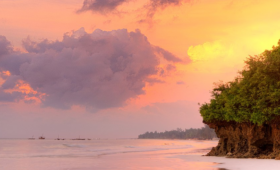
You hit the city’s beach, and everything’s in motion: grills smoking, kids weaving between plastic chairs, music pounding out of bars that spill straight onto the sand. The sun starts to drop, and suddenly the sky is layered in pink and orange, while the water reflects every bit of it back like it’s in on the performance. This is the bright, busy establishing shot: here’s the energy, here’s the color, here’s the proof that the story is alive.
From here, the peninsula is your plotline. You can stay in the noise, meet the nightlife, and lean into the chaos. Or you can wake up, grab a car, and slide down the coast—past Tokeh, River Number Two, Bureh—like you’re scrolling through scenes, picking the one that fits your mood.
It’s all closed. That’s the point. You’re not choosing if you get both city and silence; you’re choosing the order in which they’ll rearrange your brain.
The Timing: Peak Main Character Era
Sierra Leone’s beaches are in a phase every destination dreams of and rarely gets to keep.
Tourism numbers are climbing, but not crashing. New lodges are opening, but not suffocating the shoreline. Aviation stats show more people arriving each year, but you still get beaches that look like private sets. Reports talk about thousands of jobs created, better roads, improved infrastructure—but they haven’t yet been followed by the usual rush of identical resorts and traffic jams. The coastline is not trying to be everywhere at once. It’s just fully, comfortably itself.
This is the main character era: confident, layered, a little mysterious, not desperate for attention. The world will catch up. People will start dropping “Oh, Sierra Leone, of course” into conversation as they’ve always known.
So if you were to write yourself into this plot, where would you enter—under the city lights of Lumley, drink in hand, or walking alone onto that bright, unreasonable curve of sand at River Number Two like the coastline, and you have a secret only the two of you understand?