The African continent led the global tourism comeback in 2025, recording a double-digit rise in international arrivals that outpaces traditional markets like Europe and Asia. North Africa and Sub-Saharan Africa have seen increases of 11% and 10% respectively, as travelers seek out regions that offer both physical distance and emotional depth. This shift is part of the broader “experience economy,” where 70% of younger travelers seek adventures their social circles haven’t encountered.
Sustainability and ethical choices are now the primary drivers for 53% of travelers who prefer operators with active conservation footprints. We ensure that every itinerary we curate reflects this commitment, as travelers want their comfort to have a purpose beyond personal relaxation. The rise of “noctourism“—travel focused on stargazing and cosmic events—now influences nearly two-thirds of the global travel market. This trend is perfectly encapsulated by the star bed, which offers a front-row seat to the universe without the interference of urban light pollution.
The Psychology of the Unplugged Night
In our technology-entangled lives, the desire to disconnect has never been more vital for mental restoration and sleep quality. Constant connectivity leads to mental fatigue and a blurred line between work and home, making a “digital detox” safari the perfect antidote. Research suggests that spending time in nature provides a “soft fascination” that replenishes our overtaxed attention systems. At The Walk Adventures, we encourage our guests to embrace “limited connectivity” because the absence of digital noise allows the mind to start observing rather than just reacting.
In 2023, nearly 24% of luxury safari clients specifically requested signal-free stays to ensure a complete emotional reset. This disconnection is scientifically proven to reduce cortisol levels and reset circadian rhythms that are often disrupted by the blue light of our devices. The African night offers a “symphony of serenity” that acts as a natural grounding mechanism for high-stress professionals. By trading “pings for peace,” you allow your brain the chance to heal and your imagination to wander in ways modern life rarely permits.
Little Kulala: The Namibian Dreamscape
Little Kulala sits in the heart of the Namib Desert, one of the darkest and most ancient landscapes on our planet. It is an astronomer’s dream, where the stars look so close you feel you could pluck them from Orion’s belt. Each suite features a private deck where your bed can be rolled out, allowing you to sleep surrounded by a vast, prehistoric silence. Guests often lose track of time here, as the desert rhythm takes over and the Milky Way stretches to infinity.
The lodge is a pioneer in eco-design, with climate-controlled suites that blend seamlessly into the red dunes of the Sossusvlei area. The integration of indoor and outdoor living ensures you never feel separated from the raw beauty of the desert. Sleeping here is a lesson in minimalism and awe, as the lack of light pollution reveals a sky thick with diamonds. It is a location that demands you put down your phone and simply gaze upward into the inky firmament.
Elewana Loisaba Star Beds: The Iconic Pioneer
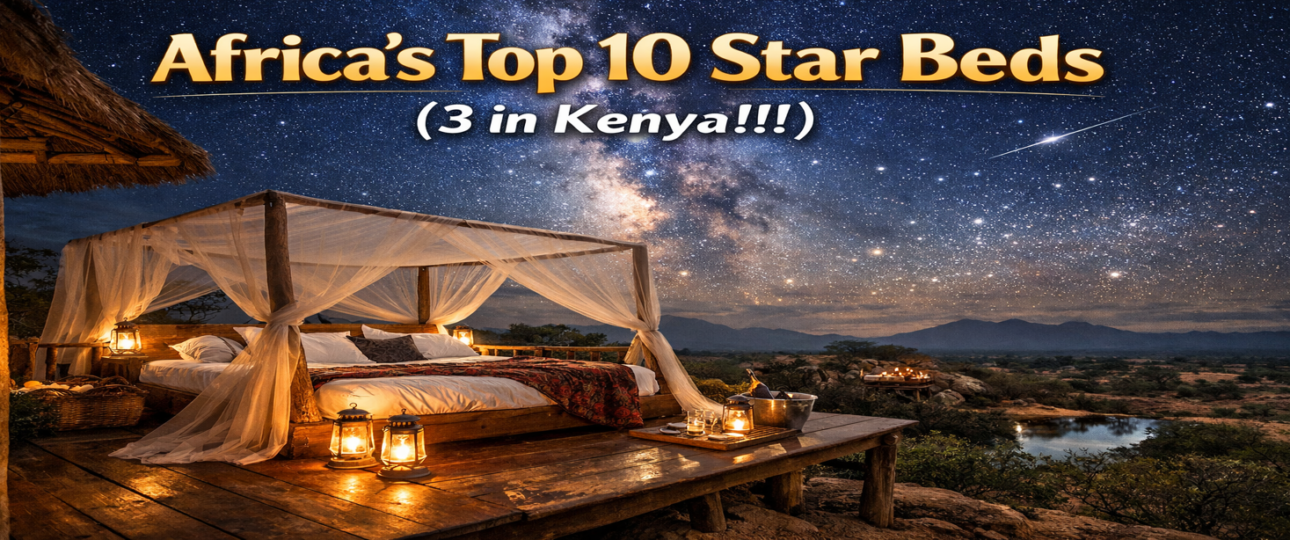
Loisaba is perhaps the most famous name in the world of star beds, perched atop a rocky kopje in Kenya’s Laikipia highlands. The beds themselves are handcrafted four-poster masterpieces on wheels, designed to be rolled out onto elevated wooden platforms. From your pillow, you can watch the permanent waterhole below, where elephants and giraffes often gather for a midnight drink. Our team at The Walk Adventures recommends this for those who want a blend of high-octane wildlife viewing and romantic isolation.
The experience is deeply rooted in local culture, as your stay is hosted by traditional Samburu and Laikipiak Maasai warriors. These experts interpret the night sky and the sounds of the bush, adding a layer of storytelling that no app can replicate. Loisaba is also a powerhouse of conservation, with 100% of tourism revenue reinvested into protecting the 57,000-acre conservancy. When you sleep here, you are directly supporting the anti-poaching units and community healthcare programs that keep this ecosystem thriving.
Ol Donyo Lodge: Kilimanjaro’s Rooftop Sanctuary
Ol Donyo Lodge occupies a dramatic position on the slopes of the Chyulu Hills, offering a direct view of the snow-capped Mount Kilimanjaro. Each of the ten suites is a masterpiece of contemporary African design, featuring private plunge pools and expansive verandas. The “star bed” here is a permanent fixture on your suite’s rooftop, accessed by a winding stone staircase that feels like a stairway to heaven. This design offers the ultimate flexibility, allowing you to move between your indoor bed and the stars as the mood strikes.
The lodge operates on the Mbirikani Group Ranch, a successful partnership with the local Maasai people that has become a global model for sustainable tourism. By staying here, you contribute to the survival of the region’s flora and the valuable cultural heritage of the Maasai. Wildlife enthusiasts will appreciate the lodge’s sunken hide, where you can sit just inches away from some of the largest “tusker” elephants in the world. It is an intimate engagement with the wilderness that is both humbling and exhilarating.
Sanctuary Baines’ Camp: The Okavango’s Secret Oasis
Sanctuary Baines’ Camp is an intimate retreat in Botswana, built with an eco-conscious philosophy that uses elephant-dung plaster and recycled cans. The camp features only five or six suites, ensuring an exclusive atmosphere that feels like a private bush home. The four-poster beds are fully mobile, allowing guests to wheel them out onto the private decks overlooking the shimmering waters of the Boro River. It is common to fall asleep to the sounds of hippos snorting in the lagoon just a few meters away.
For those seeking the ultimate in “wellness luxury,” Baines’ offers a star bath experience that is truly second to none. Imagine soaking in a copper tub on your deck, surrounded by lanterns, with the Okavango constellations as your ceiling. The camp is also famous for its “Living with Elephants” activity, where you can walk alongside orphaned elephants and learn about their role in the ecosystem. We find that this deep connection with the animals makes the nighttime experience even more profound.
Natural Selection Skybeds: The High-Altitude Thrill
If you are looking for a raw, high-adrenaline night in the bush, the Skybeds in Botswana’s Khwai Private Reserve are your destination. These are three-story wooden towers that place you high above the canopy, overlooking a waterhole frequented by predators. There are only three platforms, making this one of the most intimate and exclusive sleep-out experiences in Southern Africa. Guests often describe the sensation of being both safely elevated and thrillingly exposed to the wild.
The Khwai area is renowned for its high density of wildlife, including lions, leopards, and large elephant herds. From your bed, you can witness the nocturnal dramas of the bush as they unfold below you in the moonlight. This is a minimalist experience focused on the sounds and smells of the wild, stripped of the distractions of modern life. It is a return to a primal state of being, where the stars are your only guide.
Lion Sands Treehouses: South Africa’s Big 5 Balcony
The treehouses at Lion Sands, Chalkley, Kingston, and Tinyeleti, are the gold standard for luxury sleep-outs in South Africa. These remote structures are built high on stilts, offering complete privacy and a panoramic view of the Sabi Sand Game Reserve. Each treehouse is a self-contained sanctuary where you are left alone with a gourmet picnic and a radio, though a ranger is always on standby. We at The Walk Adventures often book these for honeymooners who want a night that is both romantic and undeniably adventurous.
Kingston Treehouse is particularly striking, constructed entirely from wood and glass to maximize the views of the surrounding bushveld. You will fall asleep to the eerie call of hyenas and the deep, guttural roar of lions echoing through the night air. These structures are located in one of the most game-rich areas in Africa, meaning your “room” is effectively a front-row seat to the Big 5. It is a luxury experience that doesn’t compromise on the raw thrill of being in a wild, unfenced environment.
Segera Retreat Nay Palad Bird Nest: Architectural Magic
The Nay Palad Bird Nest at Segera Retreat is unlike anything else in the world, resembling a giant nest perched in the Laikipia plains. Designed by Daniel Pouzet, it offers 360-degree views of the wilderness from a structure built entirely from raw timber and branches. Guests can choose to sleep in the cozy indoor bedroom or out on the open-air rooftop deck under the equatorial sky. We recommend starting your night with sundowners on the roof as the sun sinks behind the foothills of Mount Kenya.
Segera is a haven for conservation and community, featuring an anti-poaching dog unit and extensive re-greening initiatives. Your stay supports the protection of endangered species like the Grevy’s zebra and the reticulated giraffe. The Bird Nest provides a “bird’s-eye view” of a river teeming with wildlife, making your morning coffee a spectacle of nature. It is a fusion of high-end eco-design and the untamed spirit of the African bush.
Ruckomechi Camp: The Zambezi Riverfront Sleep-out
Ruckomechi Camp sits on the western edge of Mana Pools National Park, a World Heritage site known for its raw beauty and elephant populations. The camp has recently introduced a new sleep-out deck that offers a safely raised platform overlooking a busy waterhole. Guests love the sense of isolation here, as the deck is located a short drive away from the main camp, deep in the acacia groves. You are protected by high-quality mosquito netting and the watchful eye of an expert guide who stays in a nearby, but discrete, location.
Mana Pools is famous for its unique “standing” elephants that reach high into the winter-thorn trees for pods. From your star bed, you can hear the splashing of hippos in the Zambezi and the distant whoop of hyenas. This is a premier wildlife concession where the drives are exclusive and the game densities are second to none. It is a destination for the true “safari connoisseur” who wants the best wildlife experience available in Zimbabwe.
Tswalu The Malori: The Kalahari’s Silent Dream
Tswalu is South Africa’s largest private game reserve, a vast 114,000-hectare wilderness where privacy and exclusivity are the law. The Malori deck, meaning “dreamer,” is a raised platform that offers panoramic views of the Green Kalahari plains. The deck is equipped with a king-size bed dressed in Aldona linen, weather-proof blinds, and an adjacent outdoor bathroom reached by a lighted walkway. We find that Tswalu’s arid environment offers some of the most consistent and clear stargazing in the Southern Hemisphere.
The Kalahari is home to elusive “shy” species like the pangolin, aardvark, and brown hyena, which are often seen during the night drives leading to the deck. The red sand dunes at sunrise provide a backdrop that is simply indescribable in its beauty. By choosing Tswalu, you become part of a regenerative vision to restore the biodiversity of this semi-arid ecosystem. It is a deeply immersive stay that rewards those who choose to slow down and stay longer.
Singita Lebombo: The Clifftop Eagle’s Nest
Singita Lebombo is a masterclass in safari design, inspired by the eagles’ nests built into the cliffs of the N’wanetsi River. The lodge harnesses light and air to create spaces that are suspended between the earth and the sky. Each suite features a day bed on a private deck that juts out over the river, allowing you to spend the entire night under the stars if you wish. At The Walk Adventures, we believe Singita represents the absolute pinnacle of “effortless style” and service in the African bush.
The 33,000-acre private concession in Kruger is home to famous “mega-prides” of lions and a diverse array of birdlife. The architecture of the lodge is designed to “touch the Earth lightly,” using sustainable materials and contemporary finishes. Dining is a redefined journey under the creative direction of Liam Tomlin, making your star-lit dinner as sophisticated as the landscape. It is a sensory experience that pushes the boundaries of what a safari can be.
Safety and Logistics: What You Need to Know
A common myth is that sleeping under the stars exposes you to dangerous animals, but the reality is that these platforms are engineered for total security. Most star beds are raised three meters or more off the ground, keeping you far out of reach of hippos or terrestrial predators. They prioritize your peace of mind by ensuring every sleep-out includes radio contact with a nearby ranger. You are never truly alone, even when the nearest human is miles away.
The best time for a star bed experience is during the dry season, typically from May to October across most of Sub-Saharan Africa. During these months, the air is crisp, the humidity is low, and the lack of cloud cover provides the most dramatic views of the Milky Way. We recommend packing layers, a good book, and a journal to capture the thoughts that emerge during your digital detox. It is also wise to plan your trip around the new moon for the absolute darkest skies and brightest stars.
The Conservation Ripple Effect: Your Stay Matters
The growth of the luxury safari market has a direct impact on the funding of wildlife reserves, which saw a 44% boost in recent years. By choosing a star bed at a conservation-led lodge, you are funding the “rewilding” of the continent and the protection of endangered species. Loisaba and Tswalu are primary examples where 100% of revenue goes back into the land and the people who guard it. We believe that travel should be a strategic investment in the future of the planet, not just a personal luxury.
Millennial and Gen X travelers are increasingly seeking out these “purpose-driven” trips where they can see the direct results of their investment. Whether it’s through rhino ear-notching at Tswalu or visiting the anti-poaching dogs at Segera, the engagement is real and impactful. This shift is creating a new paradigm in travel where the “guest footprint” is minimized while the social and environmental benefit is maximized. At The Walk Adventures, we are proud to be part of this green industrial revolution in tourism.
Navigating the Challenges: Bugs, Bathrooms, and Beliefs
Many travelers worry about insects, but most luxury star beds use high-end mosquito netting that provides a “protective cocoon.“ In desert environments like the Namib, the harsh conditions naturally limit the number of bugs compared to tropical regions. Bathrooms are another point of curiosity, and while some are “long-drop” style for the brave, most top-tier star beds feature flush toilets and hot, solar-heated showers.
The transition from the “corporate grind” to the bush can be jarring, but the simplicity of the star bed helps facilitate a fast transition. Life becomes refreshingly simple: paddle, eat, relax, sleep. The fear of “missing out” on news or emails fades quickly as the river becomes your new feed and the canyon becomes your screen. You return to your life feeling lighter, clearer, and more connected to the world around you.
Key Takeaway: The Ultimate Reset
The African star bed is the definitive luxury experience of 2026, offering a unique fusion of high-end comfort and raw wilderness immersion. This trend is driven by a global surge in “noctourism” and a profound need for digital detox among busy professionals. By choosing destinations like Loisaba, Tswalu, or Singita Lebombo, you are not only securing a world-class night of sleep but also supporting vital conservation and community programs across the continent. We at The Walk Adventures are here to ensure your journey from the boardroom to the bush is seamless, stress-free, and truly unforgettable.
Key Takeaway Summary:
- Market Growth: The luxury safari sector is booming, with an 8% year-on-year growth driven by Millennials and Gen X.
- Mental Health: Digital detox is no longer a luxury but a necessity, with 24% of clients seeking “signal-free” stays.
- Safety: Platforms are structural marvels, raised for protection and monitored by expert guides.
- Top Picks: Namibia’s Little Kulala (Darkest Skies), Kenya’s Loisaba (Iconic), and South Africa’s Singita Lebombo (Modern Luxury).
- Conservation: Your stay directly funds anti-poaching, community health, and rewilding projects.