Malawi is not just a country.
Malawi is a presence—the kind of presence that walks into the room quietly and still somehow steals the whole show.
They’ve branded her the Warm Heart of Africa, but lately that heart has stopped humming in the background and started beating with full, unapologetic bass.
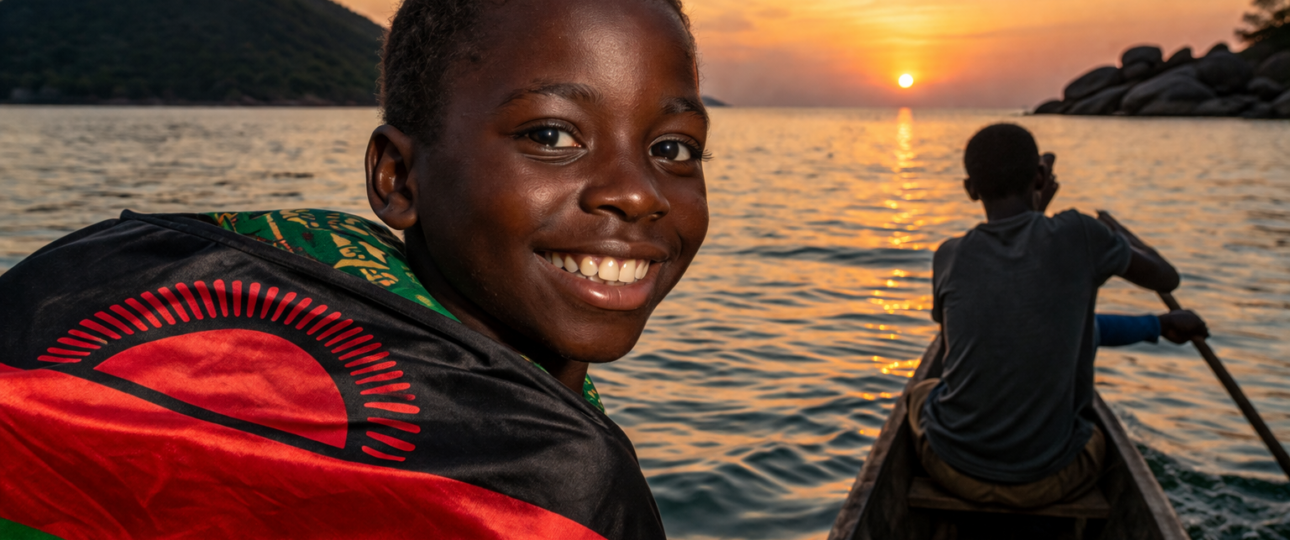
You feel it in the small moments: a stranger insisting you take the juiciest mango at the market, a guide laughing as he tells you tourism paid for his daughter’s school fees, the almost‑sacred hush as an electric boat slices across Lake Malawi without drowning out the birds.
This isn’t a destination begging for attention. This is a country doing a slow, soulful hair‑flip like, “I’ve always been this good—you’re just finally noticing.”
A New Tourism Heartbeat
For decades, Malawi was running tourism on a law written in 1968. Cute for nostalgia, terrible for a world of e‑visas and Insta‑planning.
In 2025, Parliament finally passed the Malawi Tourism Act 2025, the first full overhaul in nearly 57 years. It created the Malawi Tourism Authority (MTA) to grade, license, and properly promote the country, and elevated the Malawi College of Tourism as the main engine for training guides, hoteliers, and hosts.
Tourism Minister Vera Kamtukule describes this shift as a move toward a “modern, competitive and sustainable tourism sector,” while Natural Resources Minister Owen Chomanika is clear that the MTA is now mandated to lead Malawi’s global marketing push.
Beneath the romance of sunsets and safaris, the country is quietly rewiring the system that keeps the lights on and the standards rising.
From Hidden Gem to “Destination to Watch”
For years, Malawi has had “main character energy” but “background extra” publicity. That’s changing fast.
A 2025 feature in The Habari Network calls it a “hidden gem… under the radar,” praising its calm, friendly spirit and untapped potential. That same year, ABTA put Malawi on its influential “Destinations to Watch” list—as the only African country named—saying it “packs a great deal into its compact borders”: watersports on Lake Malawi, Big Five safaris, rich cultural encounters, all without the crush of mass tourism.
So yes, the secret is leaking. The upside? You’re still early. The crowds haven’t caught up with the hype yet.
Lake Malawi 2.0: Low‑Impact, High‑Soul
Lake Malawi doesn’t audition for you. It just lies there, vast and glassy, a freshwater horizon that seems to stretch all the way into your bloodstream. Guides will tell you about the cichlids—tiny fish flashing blues and yellows so loud they could start an argument with a peacock—and the snorkeling and diving that feel like swimming through stained glass.
At Makokola Retreat, the team has rolled out “Le‑Spa”, a wellness concept that doesn’t just copy‑paste Scandinavian minimalism onto African soil. Treatments draw on Malawian traditions, on the knowledge of local women and healers, and the lodge is pushing more immersive, digitally direct bookings.
On Likoma Island, Kaya Mawa has looked at standard air‑conditioning and politely declined. Instead, they’re installing energy‑efficient “cooling breezer” systems designed to keep you comfortable without punching holes in the planet. They’re also gearing up to launch an electric dhow—an e‑Dhow—for low‑carbon lake trips that hum instead of roar. One day very soon, you might find yourself gliding across the water in near‑silence, the night sky overhead, a soft whirr beneath you, and the heavy satisfaction of knowing your joy isn’t costing the lake its future.
Then there’s Makuzi Beach Lodge, which has decided the shortest route to your soul is through your taste buds. It’s “A Journey Through Spices” experiences that take you from the kitchen to the farm, exploring local ingredients and cooking with producers whose livelihoods are braided into the land. You crush spices between your fingers, share recipes, burn at least one dish, and leave with the sense that “wellness” here is less about detox juices and more about community, flavor, and laughter.
Wild Renewal: Safaris With a Second Chance
Malawi’s safari story could have been a tragedy. For a long time, it nearly was.
Majete, Liwonde, Nkhotakota—these names used to make conservationists sigh: stunning reserves, poached so hard that the silence felt heavier than any lion’s roar. Then something remarkable happened: the country decided not to give up on its wild heart.
Through long‑term public‑private partnerships, especially with African Parks, Malawi has been slowly rewriting the script. African Parks took over management of Majete Wildlife Reserve back in 2003, then added Nkhotakota Wildlife Reserve and Liwonde National Park in 2015, and Mangochi Forest Reserve in 2018. Together with Malawi’s Department of National Parks and Wildlife, they’ve been reintroducing species, rebuilding infrastructure, and, frankly, dragging these places back from the brink.
New wildlife introductions at Kumbali Game Reserve, expanded walking trails in Nkhotakota, and the return of voluntourism groups support education and community projects. Operators like Robin Pope Safaris now offer “Best of Malawi” small‑group journeys that stitch together Liwonde, Majete, and Lake Malawi into a coherent bush‑and‑beach circuit. No more “add‑on after your ‘real’ safari.” Malawi is writing its own marquee.
On the ground, that looks fewer vehicles crowding a sighting, more time listening to birdsong; a guide who can point out the leopard tracks and also the village where they grew up; afternoons where a “game drive” means not just watching animals, but visiting a school or community project your park fees helped fund.
Culture as Currency, Community as Host
If you come for the scenery, Malawi’s people are the plot twist.
A 2025 feature in Malawi Spotlight calls it a “cultural tourism revolution”: travelers choosing drum circles, storytelling, and cooking fires over passive sightseeing. Community‑based tourism (CBT) sits at the center—homesteads, villages, and workshops inviting visitors into everyday life for basket‑weaving, nsima lessons, and performances that aren’t choreographed for a bus schedule.
Orbis DMC notes that CBT has sparked “vibrant collaborations” and new income for small producers and guides, while Funds for NGOs highlights how rising visitor numbers are keeping young people employed in rural areas rather than forcing them to migrate for work. Places like Gwirize Cultural Village, south of Salima, show how this looks in real time: community‑run cultural experiences where your payment goes straight back into the village.
The new Tourism Act backs this up, with the MTA and Malawi College of Tourism tasked with professionalizing and scaling community‑rooted travel.
Highlands and Holy Ground
When you’ve had your fill of water, Malawi stands up and speaks in stone.
In the south, Mount Mulanje rises to about 3,002 meters at Sapitwa peak, its massif stretching roughly 26 km by 22 km. UNESCO calls the Mount Mulanje Biosphere Reserve a hotspot of biodiversity—rainforest gorges, montane grasslands, miombo woodlands, plus rare species like the critically endangered Mulanje cedar, Malawi’s national tree.
In 2025, it was inscribed as the Mount Mulanje Cultural Landscape on the UNESCO World Heritage List, recognizing not just its ecology but its role in local spiritual life, where certain sites serve as shrines and homes of ancestral spirits.
2026 is being framed as a breakout year for trekking and mountain tourism here—less crowded than Kilimanjaro, more intimate than the big hiking circuits further north. One day, you’re ankle‑deep in warm lake water; the next, you’re following a guide through cloud‑forest air, listening to stories of spirits and storms that have outlived multiple governments.
A Young Country Betting on You
Malawi is young—achingly, fiercely young.
More than half of Malawians are under 18, according to the BTI Transformation Index. That means the kid drumming at the roadside, the barista at the lakeside café, the guide who flips effortlessly between Chichewa, English, and a smattering of French—all grew up in a world where tourism wasn’t an occasional visitor but an emerging lifeline.
Growth is still modest. Projections suggest GDP growth of about 2.6% in 2026, with the government aiming for about 3.8% and 4.9% in the next two years, while seeking to bring inflation below 21% after a long stretch above it. Tourism—backed by the new Act, the MTA, and targeted goals such as 1.3 million visitors in 2025—is one of the few credible engines for jobs and foreign exchange.
So when you buy that hand‑dyed chitenje, pay for that CBT homestay, or tip the guide who got you safely off a Mulanje ridge, you’re not just checking a box on your itinerary. You’re participating in a national experiment: can a small, young country build a future where its kindness is an asset, not a vulnerability?
Why Now? Why You?
Malawi doesn’t need you to rescue it. This is not poverty voyeurism, and it’s not a charity trip—unless you count the charity of finally doing something generous for your own burnt‑out soul.
What Malawi seems to want, if you listen closely, is recognition. Fair pay for its beauty. Honest exchange: your curiosity and resources, their landscapes and stories, both sides walking away a little richer.
The laws are changing. The lake is evolving. The parks are recovering. The villages are hosting. The mountains have joined UNESCO’s chorus. The “Warm Heart of Africa” is no longer just a line on a brochure; it’s a strategy, a lifeline, a choice.
So the question isn’t whether Malawi is ready for you. The question is whether you’re ready for a place that will look you in the eye, hand you a plate of food, a paddle, or a pair of hiking boots, and wordlessly invite you into its becoming.
Because right now, the warm heart of Africa is beating louder than ever. And one day soon, you might remember this moment—not as the time you read about it, but as the moment you decided to go and hear it for yourself.